

CATASTROPHE
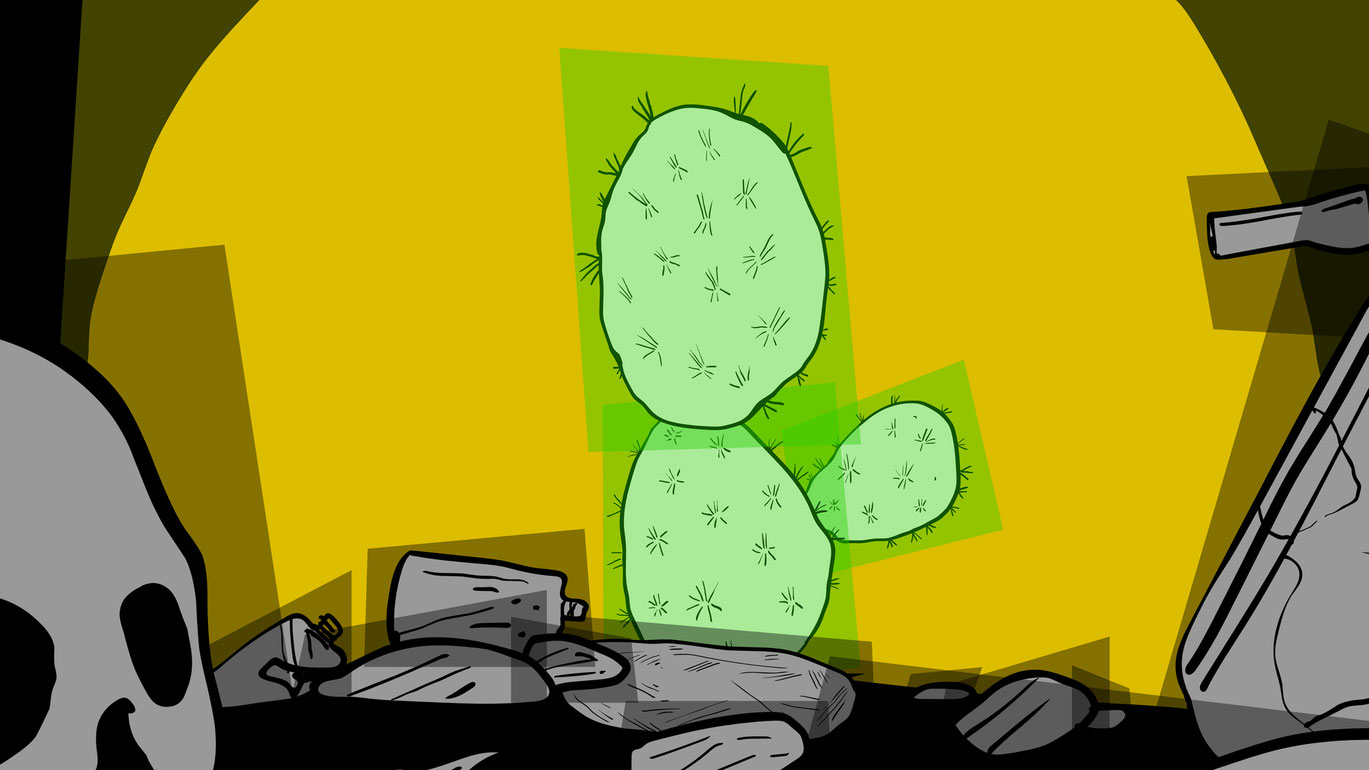
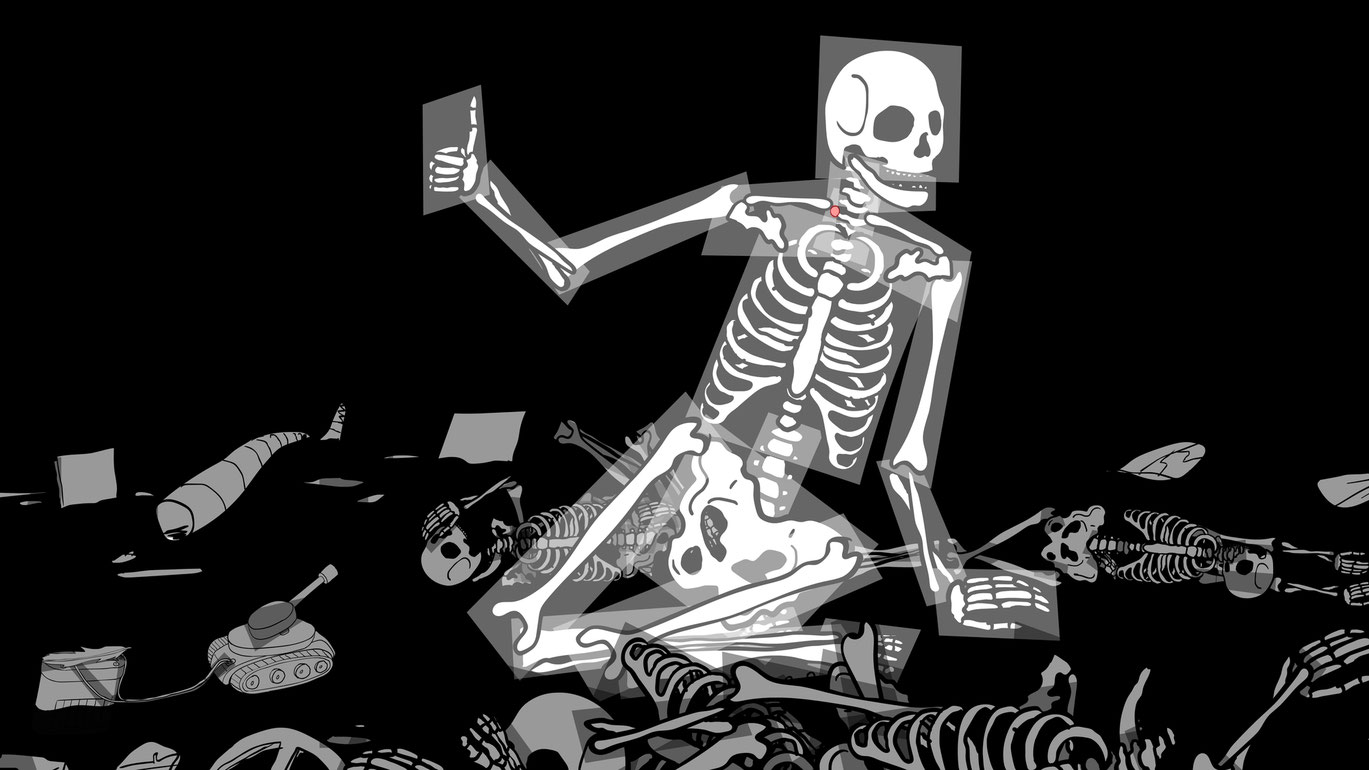
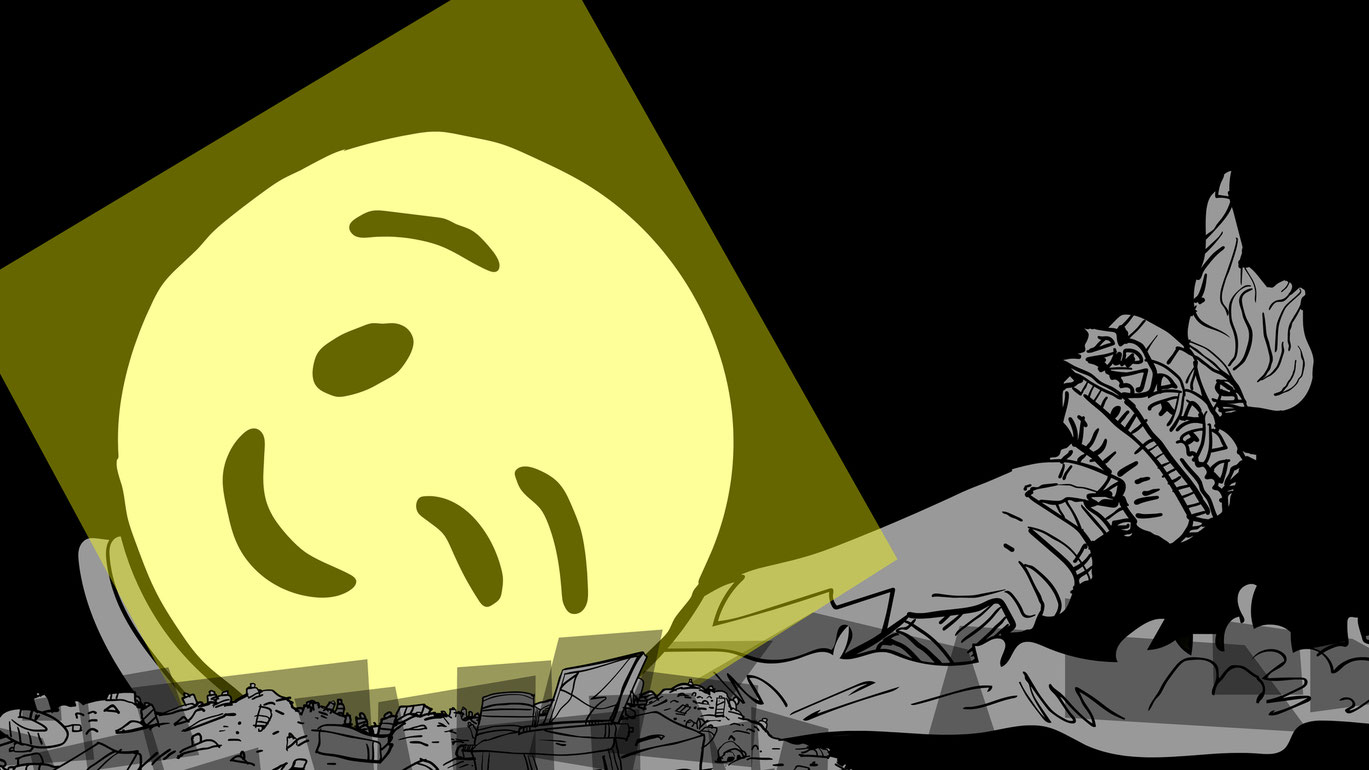
The world passes by, broken. The houses, the environment, the infrastructure, and the people are seen on a post-apocalyptic journey that is still very much occurring in the present. Signs with phrases such as “Back to normal” and “Everything used to be better” are propped up by collapsed skeletons. That second sign in particular reminds us how hollow and obsolete these platitudes have always been, how ahistorical and undifferentiated, and how superstitious (as Ernst Bloch wrote in his masterwork The Principle of Hope in the chapter entitled “None of These Newfangled Things Are Any Good”). Leopold Maurer’s animated film CATASTROPHE then continues with the yellow sun rising and initiating a Rube Goldberg-like machine effect that progresses in turn from a cactus to the portrait of the sitting U.S. president to a piggy bank, and eventually, a rubber ducky that provides the impetus for revolution.
The world depicted here is fragile. The color-accentuated connections that Leopold Maurer portrays as a chain reaction – using representative fragments of human civilization – and inexorably driving the catastrophe forward, are compelling. The electrical hum of various energy sources and time bombs settles in the ears like an acoustic horror. Finally, for a brief moment, it seems as though ivy has grown over the ultimate chaos but, as in the fourth act of a classical tragedy, this is a delaying tactic until, finally, accompanied by Eric Amelin’s remarkably idiosyncratic version of Wagner’s Ride of the Valkyries, everything explodes.
We humans haven’t done a very good job of things. (Melanie Letschnig)
CATASTROPHE
2025
Austria
5 min