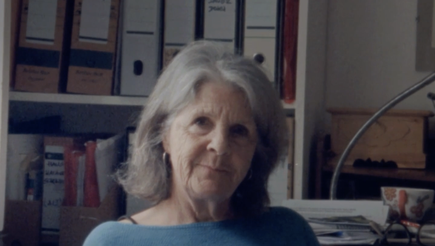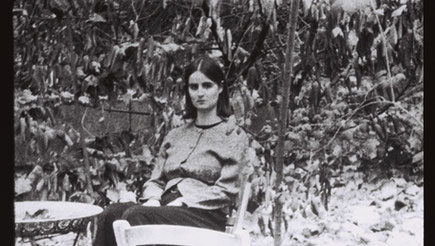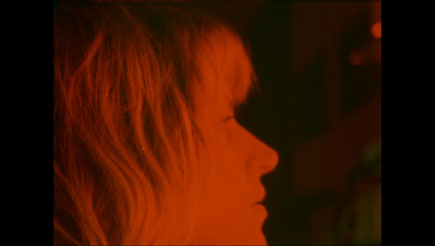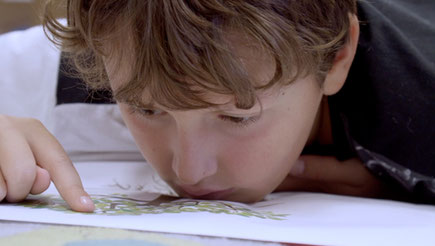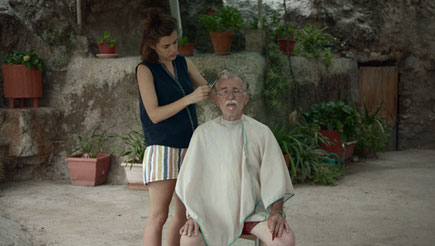
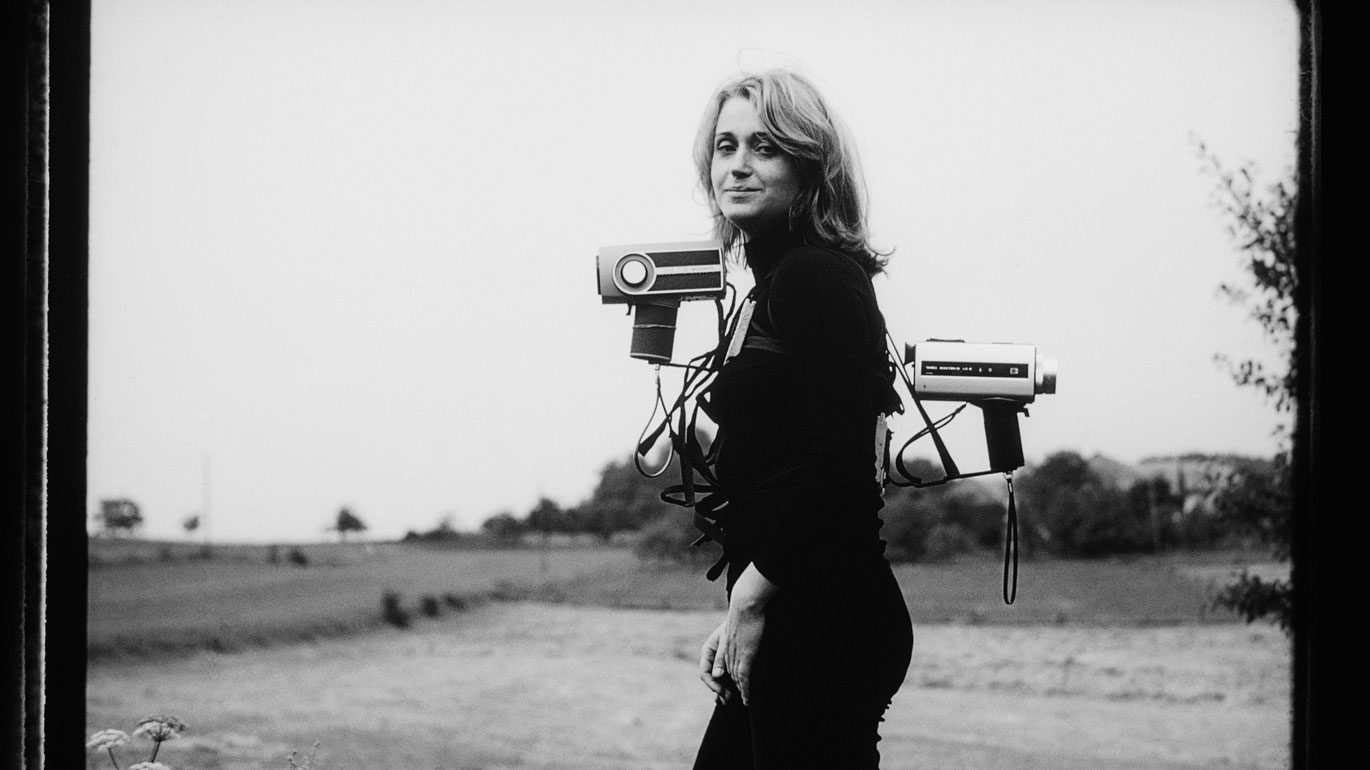
We have received the very sad news that Dóra Maurer has passed away in the 89th year of her life. Dóra Maurer, who had dual Hungarian-Austrian citizenship, was one of the most influential figures in the international art world. From the late 1960s onwards, she played an active role in establishing the international network of the Hungarian New Avant-Garde. In addition to her work as an exhibition organizer, her commitment to art education was also remarkable. Her oeuvre, spanning more than six decades, is remarkably diverse in terms of media, ranging from films, photographs, prints, and painting, which were her main focus. We knew Dóra Maurer as a person of absolute integrity, very open-minded, warm-hearted, and also curious—she will be sorely missed by us and the art and cultural world.
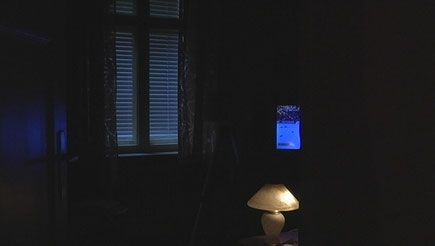
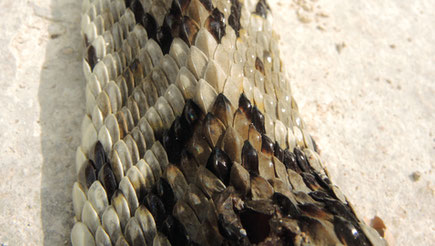
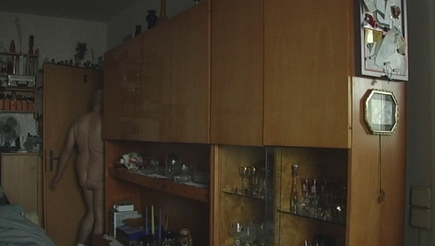
“Dóra Maurer once said that the theme central to her work is “movement in respect to the conceptual and factual effects of displacement” (1). And indeed, her extensive oeuvre produced since the end of the 1960s consistently documents movement and displacement, specifically with regard to systematics and structurality. It is the duality emanating from a particular, predetermined system combined with the subsequent observation of unforeseen deviations and ruptures that characterizes the process Maurer realized in a multi-faceted form over the course of her artistic career: from her early graphic works to her displacements as she calls them, and culminating in the “quasi-images” that she derived from spatial painting in the 1980s and 90s. Since 1973 Maurer produced a series of films in loose succession that fit in with her investigation of structure and its inherent variability. Initially, these works were solely committed to the concept of repetition and the measurability of movement, but they increasingly became concerned with a conceptual questioning of the image, closely tied to momentary fragmentations of body, movement and space. The “systems” she utilized range from seemingly simple, everyday acts (i.e. the reading of a book), to highly abstract image sequences (i.e. the presentation of purely monochrome color fields). This broad spectrum indicates early on how Maurer’s methodical approach was for all intents and purposes quite universal, although it never explicitly spread to forms of political or social systematics. And yet there is an implicit concern – and perhaps thereby unconsciously more urgent – in regard to the possibility of “dropping out of the system,” as art historian Judit Király maintains. (2) (Christian Höller, „Displacement Effects,“ Index-Edition 046, Dóra Maurer, Thinking in Proportions)
(1) DÓRA MAURER, EXTRACT FROM LECTURE AT THE HUNGARIAN UNIVERSITY OF FINE ARTS, CONFERENCE ABOUT CONCEPTUALISM IN CENTER EUROPEAN COUNTRIES [SIC], IN: DORA MAURER - TRACES 1970–1980. EXHIBITION CATALOG BUNKIER SZTRUKI, KRAKÓW, 2011, P. 19.
(2) CF. JUDIT KIRÁLY, “MATHEMATISCHE BEZÜGE IN DER KUNST VON DÓRA MAURER”, IN: MAURER DÓRA. EXHIBITION CATALOG LUDWIG MUSEUM – MUSEUM OF CONTEMPORARY ART, BUDAPEST, 2008, P. 46.
News
R.I.P. Dóra Maurer (1937-2026)
sixpackfilm @ Berlinale 2026
We are thrilled to announce the premieres of brilliant new films by Siegfried A. Fruhauf, FLIM FLAM, Varia Garib & Kirill Komar, Yuragim, both being selected for Berlinale Shorts Competition and Belinda Kazeem-Kamiński, Nursery Rhymes. (Holy) Water as well as Johann Lurf, Forever... Forever (in glorious 70mm!) as part of Forum Expanded selection of this year's Berlinale 2026